
The Mistake That Starts It All
It usually starts with a cracked spring and a YouTube video. The spring is right there, visible above the door, held on with a few bolts and a winding cone. The replacement part costs $30 to $50 at a hardware store, and the video makes it look like fifteen minutes of work with a ratchet and a steady hand. Compared to a service call that can run $150 to $400 depending on the spring type, the math seems obvious.
The mistake is treating a wound torsion spring like any other hardware. It isn't a bolt you loosen or a part you swap. A standard torsion spring on a residential door is wound under 200 to 400 pounds of torque, all of it held in place by a single cone and a set screw that most people have never looked at closely until the day they need to. That stored energy doesn't care how careful you are. It only cares whether something slips.
What Actually Goes Wrong
When a torsion spring releases unexpectedly, the winding bar can spin out of someone's hands fast enough to break fingers, fracture a wrist, or strike a face or skull hard enough to cause serious injury. This happens when people use the wrong tools, most commonly a screwdriver instead of a proper solid steel winding bar, which can bend, slip, or shoot out of the cone under load. It also happens when the set screws aren't fully seated or when someone stands in the direct path of the bar's swing instead of off to the side.
Extension springs fail differently but just as violently. Without a safety cable threaded through the center, a snapped extension spring can fly the length of a garage, hard enough to put a hole in drywall or an eye out. A lot of older installations in this area were never fitted with safety cables at all, which means the spring itself is the only thing standing between a routine repair and a trip to urgent care.
There's a second, less talked-about danger: the door itself. Once a spring is disconnected, nothing is holding a heavy door open except gravity and whatever bracing was used. Homeowners who skip securing the door with locking pliers clamped to the track have ended up with a 150-plus pound door dropping onto their hands, a car, or a foot. This is one of the most common injuries in DIY spring jobs and one of the easiest to prevent.
Why Local Conditions Make This Riskier, Not Safer
Georgia's swings between humid, heavy-rain summers and sudden cold snaps in winter take a toll on exposed metal hardware. Springs that sit in a garage exposed to humidity and pine debris corrode faster than people expect, and corrosion weakens metal unevenly. A spring that looks intact can have a hidden weak point from rust that formed months earlier during a wet stretch. Cold snaps and the occasional ice storm add another variable: metal contracts and becomes more brittle in sudden temperature drops, which is exactly the kind of condition that turns a slow leak in spring strength into a sudden, violent failure.
The Specific Steps That Prevent Injury
- Identify the spring type correctly. Torsion springs mount horizontally above the door on a metal shaft. Extension springs run along the horizontal tracks on either side. They fail differently and require different safety measures.
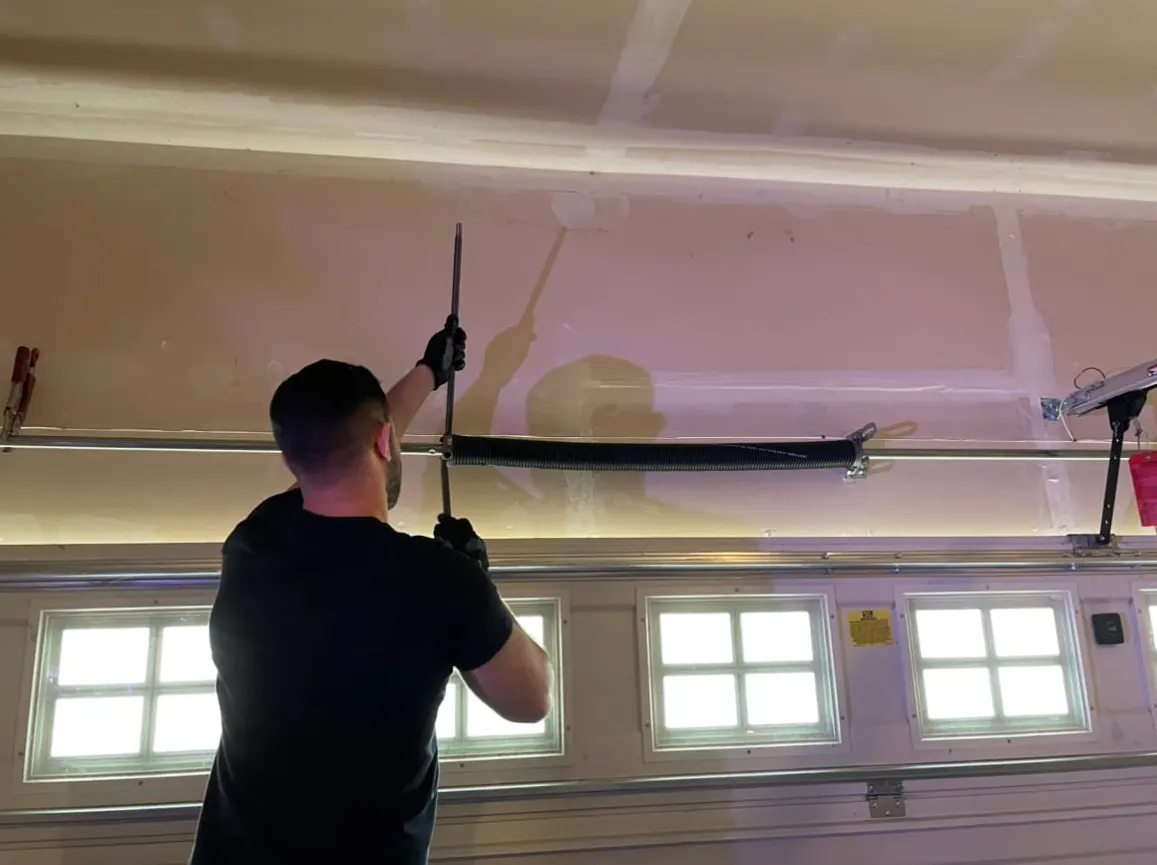
- Use the correct winding bars. Solid steel bars sized to fit the winding cone exactly, never screwdrivers, never adjustable wrenches, never anything improvised.
- Secure the door before touching anything. Locking pliers clamped to the track below the bottom roller on both sides keep the door from dropping once spring tension is removed.
- Match the spring exactly. Wire diameter, coil length, and inside diameter all have to match the original. A spring that's close but not correct can wind unevenly and fail under load.
- Install safety cables on extension springs. If the original setup didn't have them, this is the moment to add them, not skip them.
- Never stand in line with the bar's swing path or the spring itself. Most injuries happen because someone was positioned where the released energy traveled.
- Wear safety glasses. Rust flakes, metal shards, and sudden snap-back are all real risks even in a clean installation.
None of this is meant to scare homeowners away from understanding their own garage door. It's meant to explain why the people who do this work professionally use jigs, winding bars rated for the job, and years of muscle memory that tells them exactly how a spring behaves under tension. That experience is the actual product being paid for, not just the part.
When to Call Alpharetta Garage Door
If a spring has already snapped, or you've noticed a visible gap in the coils, a door that feels heavier than usual, or a loud bang from the garage followed by a door that won't open, it's time to call rather than inspect it yourself. Our Spring Replacement service includes matching the correct spring specs to your door's weight and cycle rating, securing the door safely, and testing balance and travel before we leave. If the spring failed with the door stuck halfway open or someone's car trapped inside, our Emergency Garage Door Service handles that the same day, with technicians who carry the right winding bars and safety equipment for exactly this situation.
If your garage door spring looks worn, sounds off, or has already let go, call Alpharetta Garage Door. We serve Alpharetta, Roswell, Milton, Johns Creek, Cumming, Duluth, Suwanee, and Woodstock, and we'd rather come fix it right than read about it in an ER report.