
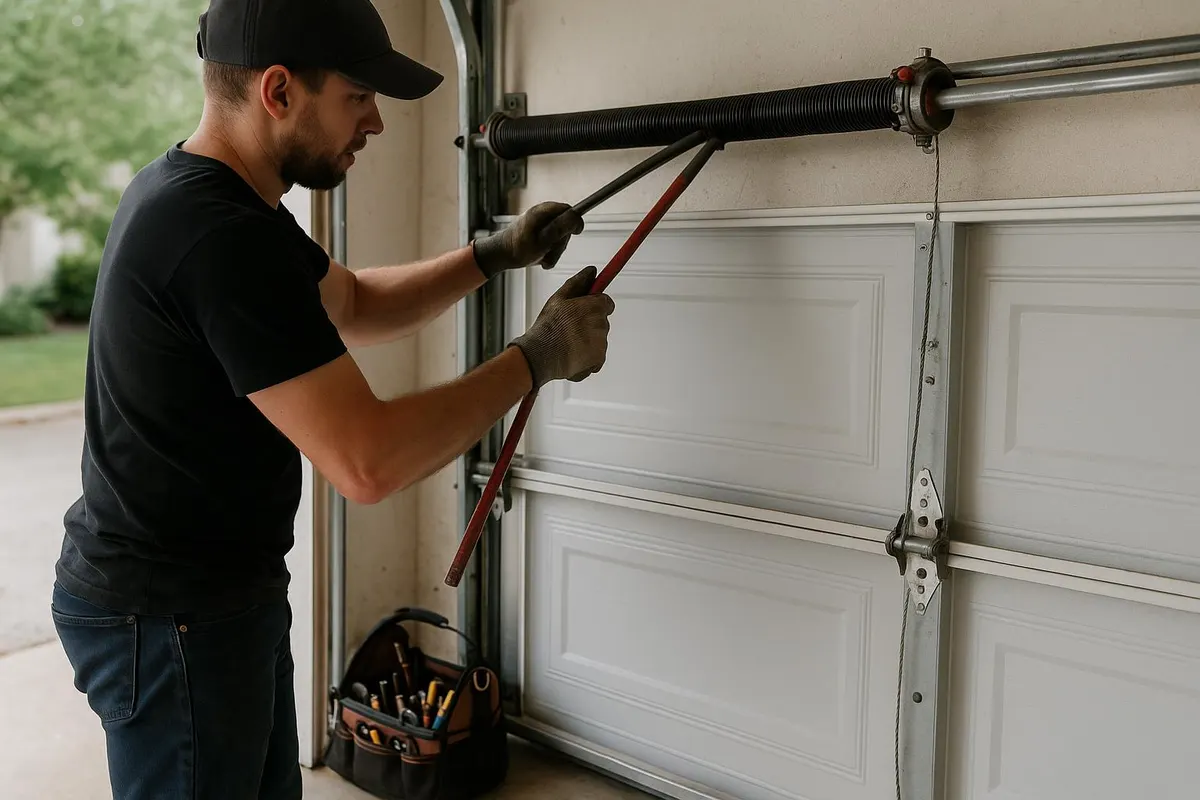
What a Technician Sees This Time of Year
Every November, the calls start the same way: a door that worked fine all through the humid summer suddenly groans, hesitates, or won't budge the first cold morning after a front comes through. Homeowners assume something broke overnight, but usually the door has been quietly wearing down since July. Summer humidity, pollen, and heavy rain soften rubber seals, gum up rollers with grit, and leave a thin film of rust starting on hardware that was never wiped dry. Cold weather doesn't cause the problem so much as it exposes it, because metal contracts, grease thickens, and anything that was marginal in October becomes a no-go in December.
Check the Weatherstripping First
The rubber seal along the bottom of the door and the strips along the sides take a beating from pine needles, pollen, and standing water all summer. By fall it's common to find sections that are cracked, flattened, or pulled loose from the track. A worn seal doesn't just let cold air in — it lets in drafts that make an attached garage noticeably colder, which matters if you've got a water heater, washer, or exposed pipes out there. Walk around the closed door on a bright day and look for daylight at the corners or bottom edge. If you see gaps, the seal needs replacing before temperatures drop further, not after.
Lubrication Matters More in Winter
Whatever lubricant got on the rollers, hinges, and tracks over the summer has likely picked up dust and pollen and turned gummy. Cold weather makes that gunk stiffer, which is a big reason doors feel sluggish or noisy on the first cold mornings. Clean the tracks and hardware with a dry cloth, then apply a silicone-based or lithium-based garage door lubricant rated for temperature swings — not household oil or WD-40, which can attract more dirt and thin out too quickly in the cold. Hit the rollers, hinges, the spring coils, and the opener's chain or screw drive.
Inspect Hardware for Rust and Wear
Humid summers followed by damp falls are exactly the conditions that start surface rust on bolts, hinges, and roller brackets, especially in garages near trees where moisture lingers. Rust weakens hardware gradually and adds friction that strains the opener and springs. Look over the hinges and roller brackets for orange flaking or pitting, and snug up any bolts that have worked loose from months of vibration. If a hinge is visibly corroded or bent, it's worth swapping out before cold weather adds extra load.
Prepare for Power Loss and Ice
Remnants of tropical systems and the occasional ice storm both bring the same risk here: the power goes out, sometimes for hours. If your opener doesn't have a battery backup, an outage means the door is stuck in whatever position it was in — which is a problem if it's up, or if you need to get a car out. A battery backup unit keeps the opener functioning through short outages and is a reasonable upgrade heading into winter. Also make sure everyone in the house knows where the manual emergency release is and how to use it, since ice can occasionally freeze a bottom seal to the concrete slab and make the door feel stuck even when nothing mechanical is wrong. If that happens, don't force the opener repeatedly — a gentle manual check first prevents a stripped seal or bent track.
Address Drafts and Insulation
If your garage sits under a bedroom, next to a laundry room, or just feels noticeably colder than the rest of the house in winter, an uninsulated steel door is often the reason. Insulated panels or a retrofit kit won't change the weather, but they cut down on heat loss and condensation on the inside of the door, which matters in a climate that swings from humid to dry-cold within days. This is also a good time to check weatherstripping around any side door into the garage, since the same wear-and-tear pattern applies there.
Test the Door's Behavior, Not Just Its Looks
Run the door up and down a few times and pay attention to sound and smoothness. A door that grinds, hesitates partway, or reverses unexpectedly is telling you something is already under strain — often a spring or cable that's been weakening quietly and will fail outright the next time cold metal adds resistance. Catching that now, before the hardest part of winter, is a lot less disruptive than dealing with a dead spring on a 20-degree morning.
When to Call Alpharetta Garage Door
If weatherstripping is cracked beyond a simple fix, if you're seeing rust on load-bearing hardware, or if the door just doesn't move the way it used to, that's the point to bring in a technician rather than guess. Our garage door maintenance service covers a full inspection of springs, cables, rollers, and the opener, with lubrication and adjustments done to manufacturer spec rather than trial and error. If a cold snap catches you with a door that won't budge at all, our emergency garage door service is built for exactly that — a same-day visit to get you back in or out safely.
Alpharetta Garage Door serves Alpharetta, Roswell, Milton, Johns Creek, Cumming, Duluth, Suwanee, and Woodstock. If your door is showing any of these signs before winter sets in, call us for a pre-winter inspection in Alpharetta, GA — it's a lot cheaper than an emergency call in January.