
Short answer: yes, and it's probably worse than you think
If your garage is attached to the house, a leaky garage door doesn't just make the garage cold or hot — it pulls your heating and cooling system into the fight. Air leaking around a worn or misaligned garage door changes the temperature of the garage, and that garage often shares a wall, a ceiling, or ductwork with living space. Your HVAC system ends up working harder to make up the difference, and that shows up on the bill. This isn't a maybe. It's basic building science, and it's an easy thing to check for yourself before you argue about it any further.
Why the garage door matters more than people think
The garage door is the single largest moving opening in most homes' exterior envelope — bigger than any window, often bigger than the front door by a wide margin. Manufacturers build in seals around the bottom, sides, and top specifically because that much surface area, if left unsealed, is a major air leak waiting to happen.
In an attached garage, this matters even more for three reasons:
- Shared walls and ceilings. The wall between the garage and the house, or the ceiling if there's a room above the garage (a bonus room, home office, or bedroom), is usually insulated to a much lower standard than exterior walls, because builders assumed the garage would stay close to outdoor temperature anyway.
- HVAC equipment and ductwork in the garage. Many homes in this area route ductwork, or even the furnace or air handler itself, through the garage. If that space is swinging wildly in temperature because of a leaky door, your ducts are losing or gaining heat before the air ever reaches a room.
- Stack effect and pressure. Warm air rises and leaks out high points, pulling in air through low gaps elsewhere — including under a garage door with a worn bottom seal. This pulls conditioned air out of the house through the garage and replaces it with unconditioned outside air.
The symptoms that point to the garage door specifically
Before assuming the garage door is the culprit, look for these telltale signs:
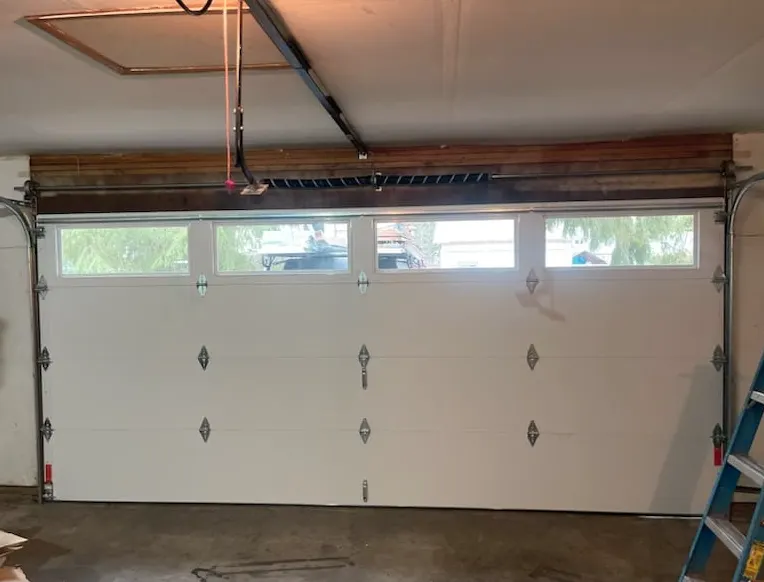
- Daylight visible around the edges of the closed door, especially at the bottom corners or along the sides
- A floor above or next to the garage that feels noticeably colder or hotter than the rest of the house
- The bottom rubber seal is cracked, flattened, or pulling away from the door — a few years old is normal to need replacing
- Weatherstripping along the sides (the vinyl strip in the track, sometimes called the astragal) is torn, brittle, or missing in sections
- You can feel a draft standing near the door on a cold or windy day
- The garage noticeably smells like pollen, cut grass, or wet pine straw after storms — a sign that outside air, and the stuff it carries, is getting in through gaps rather than just the vents
Why this is worth fixing heading into winter here
North Georgia winters aren't brutal, but they're not nothing either — you'll get stretches of real cold, the occasional ice storm, and plenty of damp, chilly nights where the furnace runs more than people expect. A garage door that's sealing poorly turns the garage into a cold box sitting right next to (or under) your living space, and your heating system pays for that every time it cycles on. Come summer, the same gaps work against your air conditioning and let in the heavy humidity this area is known for, which also raises the odds of moisture problems around stored boxes, tools, and anything wood or cardboard.
What actually fixes it — and what it costs
This usually isn't a full door replacement situation. Most of the leak comes from three wear parts:
- Bottom seal (astragal): The rubber strip along the bottom of the door compresses and cracks over time, especially with heavy rain and temperature swings. Replacement is inexpensive, typically in the range of $20–$75 for materials if you're comparing national pricing, and is one of the highest-value fixes for the cost.
- Side and top weatherstripping: The vinyl strip that runs along the frame can shrink, tear, or pop out of its track. Replacing it closes gaps you can often see daylight through.
- Panel insulation and door age: Older, uninsulated steel doors conduct outside temperature directly. If your door is original to an older home and has no insulation layer, an insulated replacement door is a bigger investment but pays off in comfort and noise reduction, not just the utility bill.
Track alignment matters too — a door that doesn't close flush against the frame because the tracks have shifted will leak no matter how good the weatherstripping is.
When to call Alpharetta Garage Door
If you've checked the seals and still have daylight gaps, or the door doesn't sit flush when closed, that's worth a proper look rather than more DIY guessing. Our technicians handle both garage door maintenance and full garage door installation for homeowners across Alpharetta, Roswell, Milton, Johns Creek, Cumming, Duluth, Suwanee, and Woodstock. A maintenance visit checks seal condition, track alignment, and hardware wear, and if the door itself is the real problem — old, uninsulated, or damaged beyond a seal swap — we'll walk you through honest replacement options instead of a stopgap fix.
If you're ready to stop guessing and start saving on that power bill, call Alpharetta Garage Door today and we'll get a technician out to take a look.